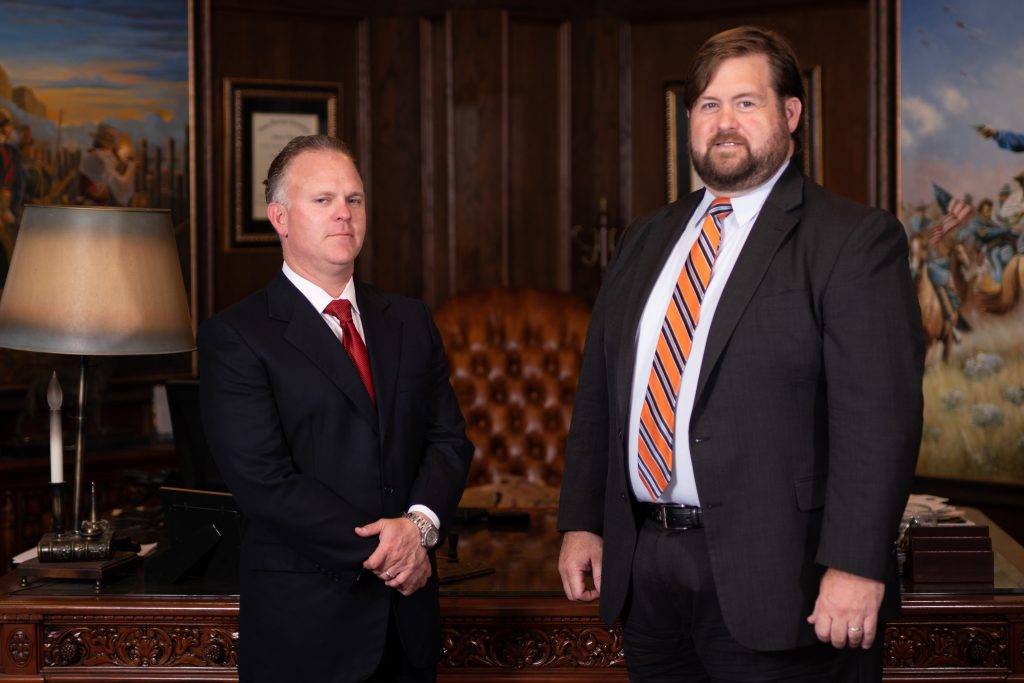
Richard
C.
McConathy
Richard
C.
McConathy
Law Offices of Richard C. McConathy
info@parkercriminallawyer.com
109 York Ave #207
Weatherford
,
TX
,
76086
USA
(817) 458-3226
This hCard created with the hCard creator.
Richard
C.
McConathy
This hCard created with the hCard creator.

Under federal guidelines from the United States Sentencing Commission, a “drug trafficking offense” is defined as “an offense under federal, state, or local law that prohibits the manufacture, import, export, distribution, or dispensing of a controlled substance (or a counterfeit substance) or the possession of a controlled substance (or a counterfeit substance) with intent to manufacture, import, export, distribute, or dispense.” Numerous criminal offenses relating to the manufacture or delivery of controlled substances, which are commonly referred to as drug trafficking crimes, are contained in the Texas Health and Safety Code.
Many people assume that drug trafficking crimes must involve some kind of drug deal, but the truth is that individuals could face drug trafficking charges in simple possession cases in which the drug possessed exceeds a certain amount. Drug trafficking crimes are aggressively prosecuted because they involve much stiffer sentences that could lead to far longer prison sentences and much bigger fines than other lower-level drug crimes.

Were you arrested for an alleged drug trafficking offense in Weatherford, Aledo, Annetta, Azle, Hudson Oaks, Reno, Springtown, Willow Park, or a surrounding community in Parker County? You are going to need to get yourself skilled legal representation to fight the very serious criminal charges.
Make sure your first call is to the talented team at the Law Offices of Richard C. McConathy so our firm can immediately begin investigating the circumstances surrounding your arrest. We will review your case and discuss all of your legal options with you when you call (817) 458-3226 or contact us online to schedule a free consultation.
Texas divides controlled substances into different penalty groups, and marijuana (referred to in the Texas Health and Safety Code as “marihuana”) is effectively in its own penalty group. Texas Health and Safety Code §§ 481.102-481.105 establishes that Penalty Group 1 includes cocaine, flunitrazepam (Rohypnol), methamphetamine, gamma hydroxybutyric acid (gamma hydroxybutyrate, GHB), ketamine, phencyclidine (PCP), phenylacetone and methylamine (when possessed together with intent to manufacture methamphetamine), opium, and several other opiates and opium derivatives, Penalty Group 1-A includes lysergic acid diethylamide (LSD) and several other chemical compounds, Penalty Group 2 includes 3,4-methylenedioxy methamphetamine (MDMA, Molly, or Ecstasy), 3,4-methylenedioxypyrovalerone (MDPV), mescaline, psilocybin, and several other hallucinogenic substances, Penalty Group 2-A includes synthetic cannabinoids and any material, compound, mixture, or preparation that contains any quantity of a natural or synthetic chemical substance, Penalty Group 3 includes diazepam (Valium), alprazolam (Xanax), methylphenidate (Ritalin), and materials, compounds, mixtures, or preparations containing limited quantities of other enumerated narcotic drugs; and Penalty Group 4 includes materials, compounds, mixtures, or preparations containing any quantity of buprenorphine, butorphanol, pyrovalerone, or other enumerated narcotic drugs.
Texas drug trafficking crimes are then broken down by the penalty group that a criminal offense is classified under.
Manufacture or Delivery of Penalty Group 1 Controlled Substance, Health, and Safety Code § 481.112
Manufacture or Delivery of Penalty Group 1-A Controlled Substance, Health, and Safety Code § 481.1121
Manufacture or Delivery of Penalty Group 2 or 2-A Controlled Substance, Health and Safety Code § 481.113
Manufacture or Delivery of Penalty Group 3 or 4 Controlled Substance, Health, and Safety Code § 481.114
Under federal law, controlled substances are divided into Drug Schedules. The Drug Enforcement Administration (DEA) states that drugs, substances, and certain chemicals used to make drugs are classified into five distinct categories or schedules depending upon the drug’s acceptable medical use and the drug’s abuse or dependency potential.
Schedule I drugs, substances, or chemicals are defined as drugs with no currently accepted medical use and a high potential for abuse. Examples of Schedule I drugs include heroin, lysergic acid diethylamide (LSD), marijuana (cannabis), 3,4-methylenedioxymethamphetamine (ecstasy), methaqualone, and peyote. Schedule II drugs, substances, or chemicals are defined as drugs with a high potential for abuse, with use potentially leading to severe psychological or physical dependence. These drugs are also considered dangerous. Some examples of Schedule II drugs include combination products with less than 15 milligrams of hydrocodone per dosage unit (Vicodin), cocaine, methamphetamine, methadone, hydromorphone (Dilaudid), meperidine (Demerol), oxycodone (OxyContin), fentanyl, Dexedrine, Adderall, and Ritalin. Schedule III drugs, substances, or chemicals are defined as drugs with a moderate to low potential for physical and psychological dependence. Schedule III drugs abuse potential is less than Schedule I and Schedule II drugs but more than Schedule IV. Some examples of Schedule III drugs include products containing less than 90 milligrams of codeine per dosage unit (Tylenol with codeine), ketamine, anabolic steroids, and testosterone. Schedule IV drugs, substances, or chemicals are defined as drugs with a low potential for abuse and low risk of dependence. Some examples of Schedule IV drugs include Xanax, Soma, Darvon, Darvocet, Valium, Ativan, Talwin, Ambien, and Tramadol. Schedule V drugs, substances, or chemicals are defined as drugs with a lower potential for abuse than Schedule IV and consist of preparations containing limited quantities of certain narcotics. Schedule V drugs are generally used for antidiarrheal, antitussive, and analgesic purposes. Some examples of Schedule V drugs are coughed preparations with less than 200 milligrams of codeine or per 100 milliliters (Robitussin AC), Lomotil, Motofen, Lyrica, and Parepectolin.
The federal penalties are not less than five years up to 40 years in prison but not less than 20 years or more than life if there is death or serious injury involved in the case as well as a fine of up to $5 million for an individual and $25 million if not an individual when a drug trafficking case involves:
The federal penalties are not less than 10 years up to life in prison but not less than 20 years or more than life if there is death or serious injury involved in the case as well as a fine of up to $10 million for an individual and $50 million if not an individual when a drug trafficking case involves:
Other drug trafficking crimes are broken down as follows:
Parker County man convicted on drug trafficking charges — The U.S. Attorney’s Office Northern District of Texas announced the conviction of a Parker County man following an investigation sparked by the Sheriff’s Criminal Investigation Division. Law enforcement authorities seized more than 4,000 pills laced with fentanyl, methamphetamine, and heroin along with seven firearms, approximately $17,000 in US currency from the man’s home during the execution of the search warrant along with a stolen trailer, 390 grams of Oxycodone pills, and a narcotics ledger. Eleven dogs were also found kept in a cruel manner at the home were surrendered to animal control officers.
Whitt Man Convicted Of Drug Trafficking Charges — A 44-year-old man of Whitt was convicted of drug trafficking and illegal gun possession charges after his arrest in April 2021. The U.S. Attorney’s Office of the Northern District of Texas announced that the man was convicted by a federal jury of conspiracy to possess with intent to distribute cocaine, fentanyl, methamphetamine, and heroin, possession with intent to distribute fentanyl, and possession of a firearm by a felon. While searching the man’s home, law enforcement officers seized over 4,000 pills laced with fentanyl, methamphetamine, and heroin along with seven firearms. Authorities also found approximately $17,000 in cash, a stolen trailer, 390 grams of Oxycodone pills, and a narcotics ledger.
If you are facing any kind of drug trafficking charge after an arrest in a Parker County community such as Weatherford, Aledo, Annetta, Azle, Hudson Oaks, Reno, Springtown, Willow Park, or another surrounding area in Texas, you are going to need to make sure that you retain legal counsel. Get yourself an attorney from the Law Offices of Richard C. McConathy.
Our firm will fight to make sure that you are able to face the fewest possible penalties. Call (817) 458-3226 or contact us online right now to set up a completely free initial consultation.